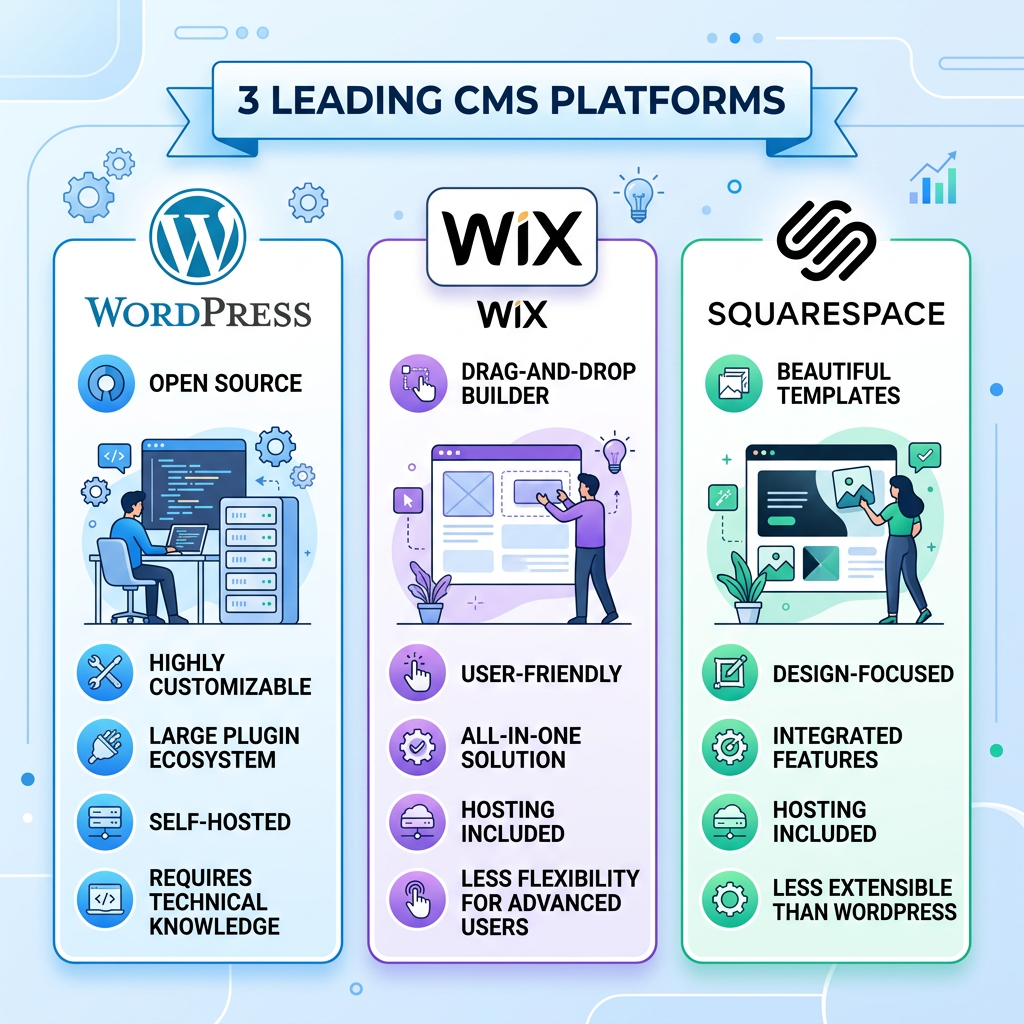
Three content management systems: WordPress, Shopify, and Squarespace, now dominate the web and significantly influence how technical SEO works across millions of websites. Together they control about 73% of the CMS market, meaning the default settings and technical decisions built into these platforms affect SEO practices at a global scale.
A large analysis of around 17 million websites found that individual SEO professionals have relatively little impact on the broader web compared to the influence of these platforms’ built-in features. Because so many websites rely on the same systems, the way these CMSs handle elements like metadata, page structure, and technical optimization effectively sets the standard for how most sites are configured for search engines. 
Over the past decade, the CMS landscape has shifted dramatically. In 2015, a majority of websites did not use any CMS at all. WordPress already had a strong presence, but Shopify and Squarespace were still small players. Since then, hosted website builders and ecommerce platforms have grown rapidly. Shopify experienced explosive growth, while Squarespace steadily expanded its share. Meanwhile, older systems such as Joomla and Drupal lost most of their market share, dropping from about 14% combined to under 3%. 
WordPress remains the largest platform, though its growth has recently slowed and slightly declined after years of expansion. The overall trend shows increasing concentration, where a few platforms shape how websites are built and optimized. As a result, influencing these platforms’ technical standards may have a far greater impact on SEO across the web than optimizing individual sites.